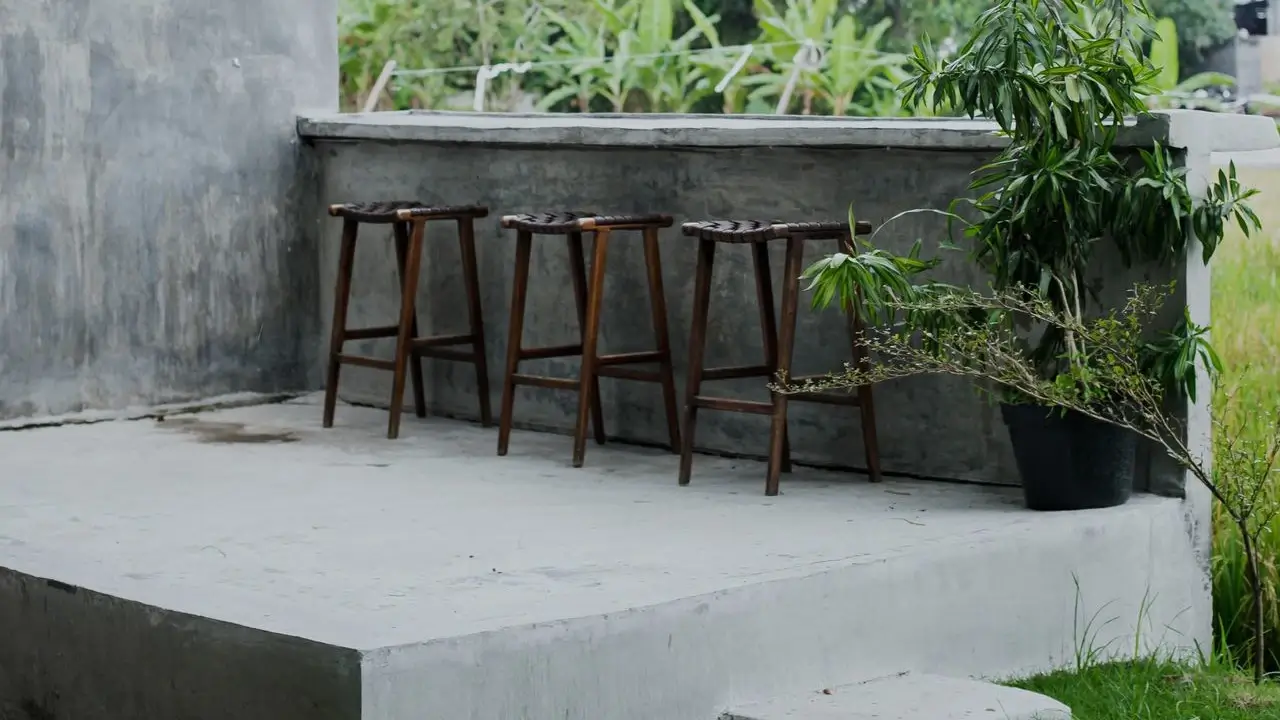

There's a point where an old concrete patio stops being a patio and starts being a problem. Maybe it's cracked so badly that the furniture wobbles. Maybe it's pitched toward the house instead of away from it, funneling water toward your foundation every time it rains. Or maybe it's just ugly — one of those sad, gray slabs that's been baking in the sun since the Reagan administration.
Whatever the reason, you're ready for it to be gone.
But concrete removal isn't like tossing out an old couch. That stuff is heavy. Really heavy. A cubic yard of concrete weighs about two tons. Even a modest 10-by-10-foot patio can tip the scales at close to five tons of material. And if there's wire mesh or rebar inside? That's a whole other headache.
At Bobby Built It, we handle concrete and patio demolition across Monmouth County, Ocean County, and the surrounding parts of Central New Jersey. If you're staring at a slab you want gone, here's what you should know before swinging a sledgehammer.
And if you're tackling a bigger backyard overhaul, our excavation and site prep guide covers how demolition fits into larger projects.
Not all concrete removal jobs are the same. The approach changes depending on what you're dealing with.
Concrete patios are the most common call we get. These are usually 4 to 6 inches thick, often poured directly on grade, and may or may not have reinforcement inside. Older patios from the '70s and '80s frequently have wire mesh embedded in the slab, which makes breaking and separating the material a lot more work.
Walkways and sidewalks tend to be thinner but come with their own quirks. They're often poured in sections with expansion joints, which actually helps with removal. The pieces come up in manageable chunks. The tricky part is when tree roots have grown underneath and fused with the concrete. That's when a simple pop-and-haul turns into root cutting and grading.
Driveways are the big leagues. Concrete driveways in NJ are typically 6 inches thick and heavily reinforced with rebar or mesh. They're also poured in larger continuous slabs, which means heavier pieces and more cutting. The weight alone — often 10 to 15 tons for a full two-car driveway — makes disposal a logistical challenge.
Footings and retaining walls are a different beast entirely. These tend to be thicker, deeper, and sometimes tied into adjacent structures. Removing them without disturbing what's next to them takes some finesse.
You can rent a jackhammer from any big-box hardware store for about $75 a day. And honestly, for a small section of walkway or a single step, that's a reasonable DIY project if you're in decent shape and don't mind a day of hard labor.
But once you're dealing with anything bigger than a sidewalk square, the math changes fast.
A full-size electric jackhammer will break concrete, sure. Slowly. Loudly. And you'll feel every vibration in your hands, arms, and spine for about a week afterward. Now picture doing that for eight hours straight while a 4-inch-thick slab fights you the whole way.
That's why pros use different tools depending on the job.
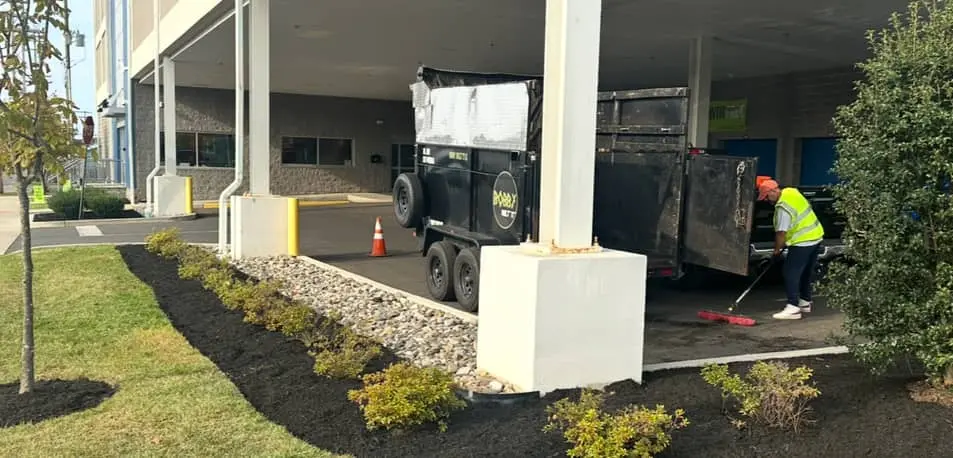
For most residential patio and walkway removals, we use a skid steer with a hydraulic breaker attachment. It's basically a mini excavator with a jackhammer on the end, and it makes quick work of slabs that would take a person all day. For driveways and larger jobs, we might bring in a full-size excavator with a breaker or a concrete saw to cut the slab into manageable sections.
Then there's the disposal side of things. Even if you manage to break the concrete, you've still got tons of debris sitting in your yard. Loading it by hand into a dumpster or trailer is backbreaking work. And some disposal facilities charge by the ton, so you're paying to get rid of it too.
This is one of those projects where hiring it out isn't just about convenience. It's about not destroying your body for a weekend and still having a pile of rubble to deal with on Monday morning.
Pricing breaks down into a few buckets: labor and equipment, disposal fees, and site conditions. Here's what we typically see in Monmouth and Ocean County.
Things that push the price higher include:
If you're also getting rid of an old deck, shed, or hot tub at the same time, bundling the work usually saves money since equipment and disposal are already on site. Our deck demolition guide and shed and pool removal article cover those scenarios.
Here's the process from start to finish, because I think knowing what to expect takes the stress out of it.
First, we walk the site with you to confirm the scope. What's coming out? What's staying? Are there any utilities, sprinkler lines, or hidden obstacles we need to know about? This is also when we figure out equipment access and where debris will be staged.
Then we get to work breaking the concrete. If there's rebar or mesh, we cut it as we go with torches or angle grinders. The debris gets loaded into a dump truck or trailer, either directly by the machine or staged in a pile first.
After the concrete is up, we do a quick grade of the exposed soil. Nothing fancy — just knocking down high spots and filling low ones so the area drains and doesn't turn into a mud pit. If you're planning to put in a new patio, pavers, or landscaping right away, we can leave the base prep-ready. If you're doing that later, we'll at least make sure the spot is level and tidy.
Finally, everything gets hauled away. Clean concrete can often be recycled as crushed aggregate, and we try to go that route whenever possible. It keeps material out of landfills and usually costs less to dispose of.
We got a call from a homeowner in Howell last fall. She had a concrete patio in her backyard that was maybe 300 square feet, poured sometime in the '80s, and it had cracked so badly that sections had separated and sunk by a couple of inches. Tripping hazard. Eyesore. The whole thing.
When we started breaking it up, we found out why it failed. The patio had been poured about 4 inches thick, which is fine, but there was zero base underneath. No gravel, no stone dust, just concrete on top of loose fill dirt. Over four decades, that dirt settled unevenly, and the slab cracked right along the stress lines.
Worse, the original builder had tossed random construction debris into the fill — chunks of brick, old asphalt, even a couple of cinder blocks. That stuff doesn't compact. It creates voids. And eventually, the slab gives way.
We broke the whole thing out in about three hours, separated the metal mesh, and hauled away close to six tons of concrete and buried junk. When we graded the soil underneath, it was the first time that spot had seen clean, level ground since the Reagan years.
The homeowner walked out, looked at the empty space, and said, "I can't believe I waited ten years to do this."
That's the thing about concrete removal. It's one of those projects that feels overwhelming until it's done, and then you wonder why you didn't pull the trigger sooner.
Yes, and a lot of homeowners do exactly that.
Once the old slab is out, you've got a blank canvas. Pouring a new patio, walkway, or driveway on the same footprint usually requires some additional base prep — compacted stone, proper grading, maybe form boards — but the demolition sets the stage perfectly.
If you're going from concrete to something else — pavers, gravel, grass, or a garden — the exposed soil after removal is your starting point. Just make sure the area drains properly before you build on top of it.
For standard residential concrete removal, most towns in Monmouth and Ocean County don't require a permit. You're taking something out, not putting something in.
The exceptions are usually when the concrete is part of a regulated structure, like a foundation, a public sidewalk, or a driveway apron that connects to a township road. In those cases, the municipality may want to inspect the work or require a permit for the replacement.
We always recommend checking with your local building department if you're unsure, and we're happy to help navigate that conversation.
Here's a handful of towns where we're doing a lot of concrete work lately:
Monmouth County:
Ocean County:
If your town isn't listed, don't worry. We cover all of Monmouth County, Ocean County, and parts of Middlesex County. You can check our county pages for Ocean County services and Middlesex County services, or just reach out directly.
Our full services page also breaks down everything else we handle — excavation, land clearing, junk removal, and more.
Here's the bottom line. Concrete removal is loud, heavy, and physically punishing work. But with the right equipment and a crew that knows what it's doing, it goes fast. Most residential jobs are done in a day. You come home to a clean slate, literally.
If you've got a cracked patio, an old walkway, or a slab that's been bugging you for years, Bobby Built It can handle the whole thing — demolition, haul-away, and site cleanup — across Monmouth County, Ocean County, and Central NJ.
Contact us today for a free estimate. Let's get that concrete out of your life.
Bobby Built It, LLC — Demolition, excavation, hauling, and site work across Central New Jersey.
Want exclusive deals, seasonal tips, and a peek behind the scenes at Bobby Built It? Join our email list and get the good stuff—no spam, just honest updates from your local junk & demo crew.