
A gravel driveway does something to a property that asphalt or concrete just can't touch. There's that satisfying crunch under your tires when you pull in, sure, but it's more than that. It's the way a winding stone path instantly makes a home feel like it belongs in the countryside, even if you're five minutes from Route 9.
But anyone who's lived with a gravel driveway in Monmouth or Ocean County long enough knows the dark side too. The potholes that swallow your car after a heavy rain. The washboard ripples that rattle your suspension. And the mysterious disappearing gravel that somehow ends up in your lawn, your flower beds, and — if we're being honest — your living room carpet.
Getting a new gravel driveway installed, or nursing an old one back to life, is one of those projects that falls into a weird gray area. It looks simple. Dump rock. Spread rock. Done, right?
Not quite.
What you're really dealing with is a miniature site-work project. And if you skip the foundation work, ignore drainage, or use the wrong stone, you'll be fighting the same problems every spring until you lose your mind.
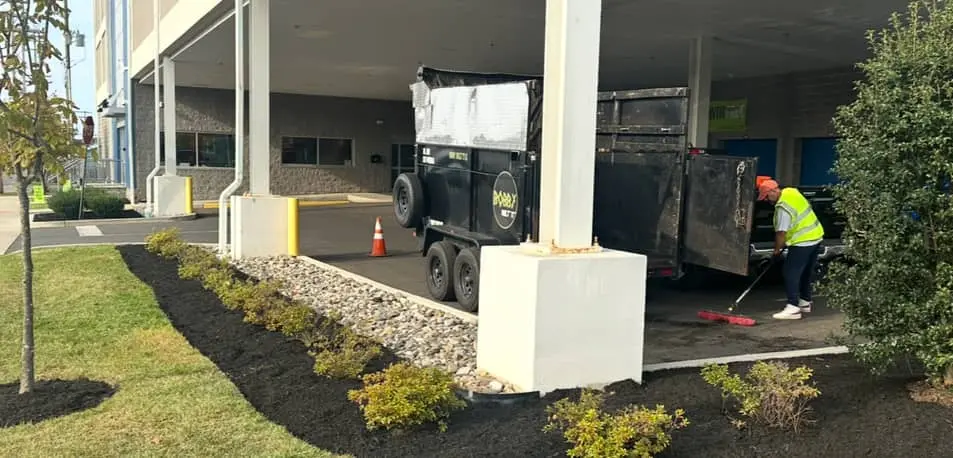
That's where we come in. Bobby Built It handles gravel driveway installation, full replacements, regrading, and pothole repair all over Central New Jersey.
And if your driveway project is part of a bigger outdoor overhaul, you might find some useful info in our guide to excavation and site prep in Monmouth County.
Let's walk through the whole thing, because I think knowing what happens behind the scenes helps you understand why some quotes are higher than others, and where corners can get cut.
Here's the part nobody posts on Instagram.
Before a single stone hits the ground, the driveway path needs to be excavated down to solid, undisturbed soil. That usually means scraping away anywhere from 6 to 12 inches of topsoil, sod, roots, and whatever else nature's been working on.
Why so deep? Because topsoil is spongy. It's full of organic material that compresses, decomposes, and shifts with the seasons. If you spread gravel on top of it, you're basically building a road on a waterbed. It'll feel fine for a few months, and then the ruts will start.
After excavation, the subgrade — that's just the bare dirt underneath — gets compacted with a plate compactor or a roller. This step seals the deal. Without it, you're rolling the dice.
Then comes a layer of large, angular stone — often called dense-graded aggregate, #3 stone, or road base depending on who you ask. This layer is usually 4 to 6 inches thick. The angular edges lock together under pressure and create a stable, load-bearing surface that spreads the weight of vehicles instead of letting them sink.
Finally, the top layer goes down. We'll talk about stone choices in a minute, but this is typically 2 to 4 inches of something smaller and crushed that will pack down tight.
I know, I know. Rock is rock. Until it isn't.
The stuff you choose for the surface layer makes a huge difference in how your driveway looks, performs, and holds up over time. Here's the short version:
Crushed bluestone — The fancy one. It compacts well, has that blue-gray color everyone loves, and drains beautifully. It's not the cheapest, but it's probably the most popular in nicer neighborhoods.
Driveway stone / DGA — The workhorse. A mix of crushed stone and stone dust that packs down almost like concrete. It's affordable and creates a hard surface that doesn't shift much. The trade-off? It can get dusty in dry weather and track a bit of mud onto shoes.
Crushed concrete or recycled asphalt — Budget-friendly and surprisingly effective. It packs well and costs less than virgin stone. The color varies, and it might have some random bits in it, but it gets the job done.
Pea gravel — The troublemaker. It's round, smooth, and looks great in photos. It also refuses to stay put. Pea gravel shifts like crazy, doesn't compact, and will spread all over creation. We generally steer homeowners away from it for driveways unless it's purely decorative and won't see much tire traffic.
You know what kills gravel driveways faster than anything else?
Water.
Specifically, water that sits on the surface, runs down the middle, or pools at the edges. A driveway that isn't crowned properly — meaning it's higher in the center and slopes gently to the sides — turns into a creek bed during a storm. Gravel washes away. Channels form. Then the base gets saturated and soft, and suddenly you've got a mud pit where your car used to be.
Sometimes we install a culvert pipe underneath the driveway where it meets the road or crosses a drainage swale. Sometimes we add a strip drain or a dry well to catch runoff before it causes damage. Every property is different. The soil in Freehold isn't the same as the sandy ground in Brick, so the approach changes.
If you've had water problems before, don't just hope a new layer of stone will fix it. It won't. The water will win. It always does. We need to give it somewhere to go.
Depends on what we're dealing with.
If the base is still solid but the surface has gotten thin or uneven, we can often regrade what's there and add a fresh layer of stone on top. This usually involves using a compact tractor or skid steer with a grading attachment to knock down high spots, fill in low spots, and re-crown the surface. Then we spread 2 to 3 inches of new gravel and compact it. The whole thing looks brand new for about half the cost of a full tear-out.
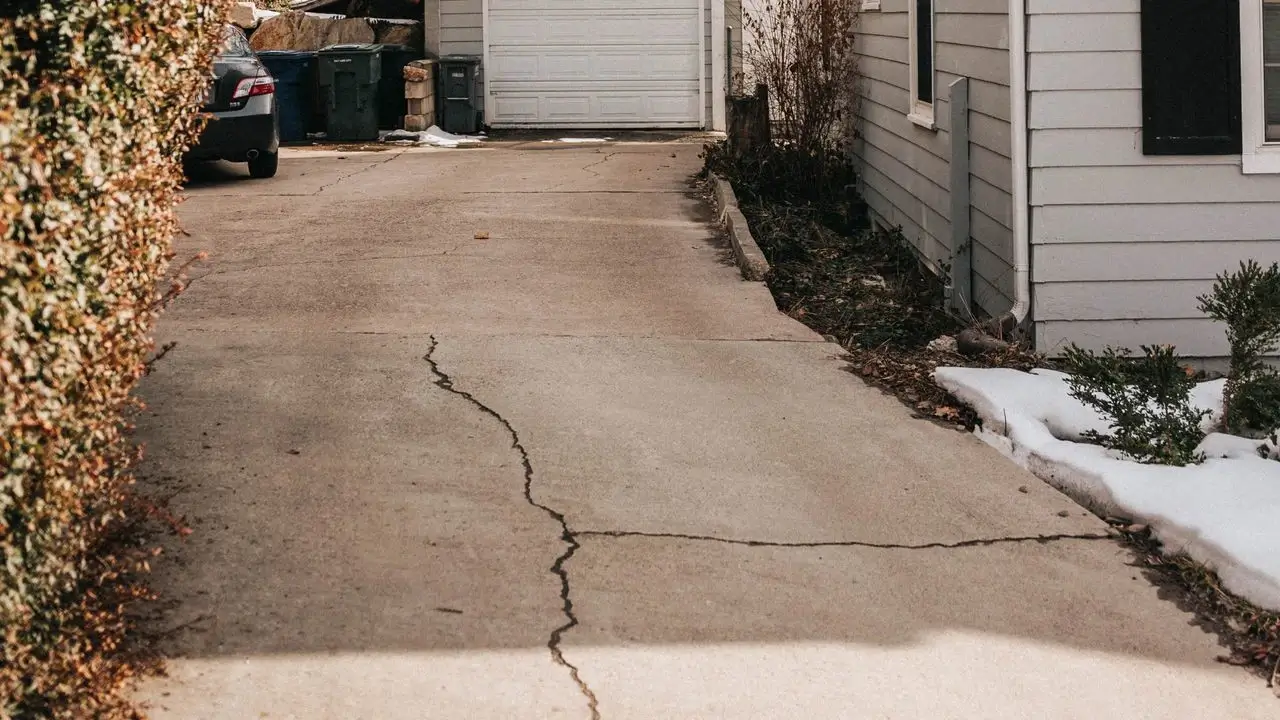
But if we're seeing serious potholes that go deep into the subgrade, standing water that never drains, or a base layer that's mixed with mud and organic material, a patch job is just delaying the inevitable. You end up chasing problems around the yard until you finally do the whole thing over anyway.
Let me tell you about a job we did last spring in Wall Township.
A guy named Mike called us about his driveway. It was maybe 150 feet long, curved through some oak trees, and led to a nice ranch house. Gorgeous setup. But the driveway itself looked like the surface of the moon. Potholes you could lose a small dog in. He'd been dumping bagged cold patch and leftover stone on it for years, and nothing helped.
When we showed up, I walked the driveway with him. "It's got to be a base problem," I told him. He nodded, kind of defeated. "That's what I figured. I just didn't want to hear it."
We scraped the whole thing back and found exactly what I expected. The original base was maybe two inches of mixed stone over sandy topsoil. No fabric. No compaction. It had never really been built, just… placed.
We excavated properly, laid geotextile fabric to separate the subgrade from the stone, compacted the base, and brought in fresh DGA in two lifts, compacting each one. By the time we left, the driveway was smooth, crowned, and draining right into the natural swale on the south side of the property.
Mike called me a month later and said something I still remember. "I didn't realize how much I dreaded pulling into my own driveway until I didn't have to anymore."
I'm not going to throw out a single number because that would be misleading. Every driveway is its own thing. But I can give you ranges based on what we typically see.
For a full new installation with excavation, base, and surface stone:
For regrading and resurfacing an existing driveway:
Asphalt millings and recycled materials can drop material costs by 20–30%, and we're happy to source them when it makes sense. Just keep in mind they may track inside and don't look quite as polished as virgin stone.
If your project also involves removing an old shed, pool, or other structure to make way for the driveway, we've got an article on shed, hot tub, and above-ground pool removal in NJ that covers what to expect.
And if you're thinking, "well, what about just doing it myself?" — honestly, for a small parking pad or a short straight section, a determined homeowner with a weekend, a strong back, and access to a truck can make it happen. But once you're talking about a 100-foot driveway that needs excavation, grading, and proper compaction, the equipment alone makes renting and doing it yourself less of a bargain than you might think.
I get this question a lot. Which one should I pick?
If you want the absolute cheapest upfront cost, gravel wins every time. It also handles freeze-thaw cycles without cracking, drains well (if built right), and can be refreshed with a new layer of stone years down the road.
Asphalt looks cleaner, lasts 15–20 years with maintenance, and holds up to snowplows better. But it costs 2–3 times more up front and cracks over time. Sealcoating every few years is a must.
Pavers are beautiful and last forever when installed correctly, but they're also the most expensive option by a mile and require a serious base preparation effort. Think $15–$30 per square foot installed.
For a lot of homes in Central Jersey, especially larger properties, gravel just makes sense. It's cost-effective, looks right at home with a rural or semi-rural aesthetic, and keeps stormwater on-site instead of sending it to the street.
Lately, we've been running a bunch of driveway jobs in:
If you're in any of these areas and your driveway looks like it's slowly returning to nature, give us a shout. We also have service pages covering Ocean County and Middlesex County, and we're happy to work with properties on the border areas too.
You can also learn more about our full services page for hauling, excavation, and site prep details.
Most towns in Monmouth and Ocean County don't require a permit for a gravel driveway resurface or regrade, but if you're putting in a new curb cut, widening an existing opening, or doing major drainage work near a public road, you might need one. We always recommend checking with your municipality or letting us handle that conversation. We've worked with enough townships to know what's going to trigger a permit and what isn't.
Here's the thing. A bad driveway doesn't just annoy you. It eats away at how you feel about your home every single day. You see it before you've had your coffee. You navigate it at night, in the rain, trying not to bottom out. It becomes this low-grade background stress that you just accept.
And the crazy part is, fixing it is usually less expensive and less disruptive than people expect.
If you're anywhere in Monmouth County, Ocean County, or the surrounding parts of Central NJ, Bobby Built It can handle the whole process — excavation, base work, stone delivery, grading, compaction, and cleanup. No subcontractors, no games, just a driveway that works the way it's supposed to.
Get in touch here for a free estimate. Let's figure out what your driveway actually needs and get it done right.
Bobby Built It, LLC — Excavation, demolition, hauling, and site work across Central New Jersey.
Want exclusive deals, seasonal tips, and a peek behind the scenes at Bobby Built It? Join our email list and get the good stuff—no spam, just honest updates from your local junk & demo crew.